
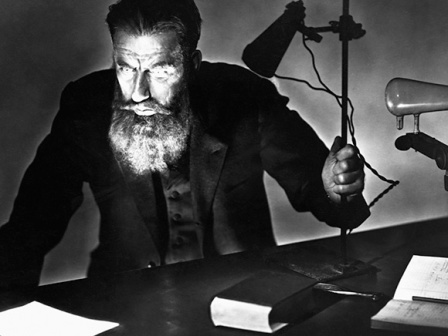
What motivated me to write this short article about Roentgen was the question of who the discoverer of x-rays was, what he did, and how much radiologists know about him beyond his name. The second motivation was the search for ethical examples within radiology, examples that can guide us as radiologists.
Throughout the history of radiology, we are likely to find few examples like that of Roentgen, a man who dedicated his life to research; who made one of the greatest discoveries of the last two centuries; who renounced the patent for that discovery and, therefore, the wealth it would have brought, arguing that such a discovery belonged to all of humanity and that his ethical duty did not allow him to patent it; who donated his Nobel Prize money to universities so that they could continue research for the benefit of humanity; and who died poor, a few years after the death of his wife and partner, Bertha. It is remarkable that both of them risked their lives to X-rays, as their desire to investigate and discover took precedence over everything else, even their own lives.
Roentgen was born in Prussia in 1845 and lived in the Netherlands from the age of three. He was not a doctor but a physicist and engineer, yet his discovery was one of the great contributions of basic science to the development of medicine, and especially to diagnostic imaging. Like many who have excelled in various fields, he was rejected by the academic establishment of his time, which claimed that Wilhelm did not meet the necessary requirements to be part of academia. After being expelled from one university, he was able to complete and pursue his studies at another. However, he was not accepted as a teacher or researcher at the beginning of his career. He was finally accepted in Strasbourg in 1873, through his mentor Kundt, at which point he joined the university as a professor. Years later, the University of Utrecht, which had initially rejected him, invited him to head a chair, which he declined.
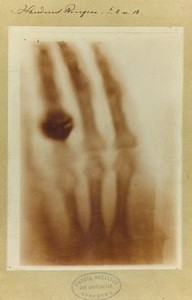
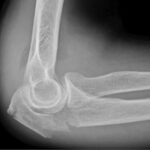
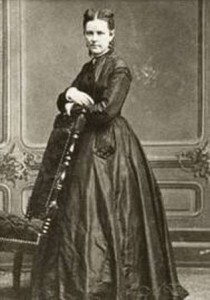
It was on November 8, 1895, during his research, that Roentgen, experimenting with the penetrating power of cathode rays, observed that a cardboard plate covered with crystals emitted a fluorescence. This fluorescence disappeared when he disconnected the power. He continued repeating the experiment because he was a proponent of research and soon discovered that these rays (which he called «X-rays») passed through different types of materials but not lead. He also realized that when he held a lead ring with his fingers, he could see not only the ring but also the bones of his hand. It occurred to him that he could «print» the image on a photographic plate, and that is how he made the first X-ray. The hand that appears in this first image is that of his wife, Bertha, who was always by his side throughout his life. Beyond how they were discovered, it is important to emphasize that for the researcher and for the creator in general, being attentive to the progress of their work is central, as is being open and willing to adapt as their creation unfolds. If you look for only one thing, you lose countless other possibilities in the process.
After making this discovery, Roentgen published it in various journals, both in the fields of medicine and physics, and it quickly gained widespread attention, earning him accolades until his death and even beyond. One of the awards he received was the first Nobel Prize in Physics, the sum of which he donated to the university where he conducted his research. It was clear that he wasn’t seeking personal enrichment from his discovery, as he could easily have achieved that goal had he wanted it; rather, he was interested in the research itself, which was the focus of his life. Examples like this are difficult to find today, and even in that era, when several people tried to claim his discovery as their own.
After all this, Roentgen took a position at the University of Munich. Following the outbreak of World War I, he and his wife, Bertha, retreated to the Bavarian Alps. She died in 1919, around the same time he lost all his money due to the postwar collapse of the Deutsche Mark. He then resigned his professorship in Munich and lived in near poverty until his death in 1923 from colon cancer.
For any comments or suggestions: radiologyzones@gmail.com
This material was automatically translated from medicosradiologos.com.ar