
To remind us of the supposed global interests in health around 1978 and what was intended for the year 2000, we present this declaration, with the intention that we all remember what was intended and what has not been achieved to date. And also with the intention that we commit ourselves daily to our work as physicians.
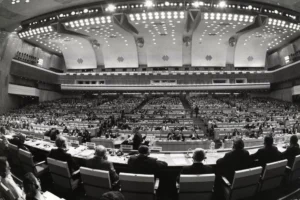
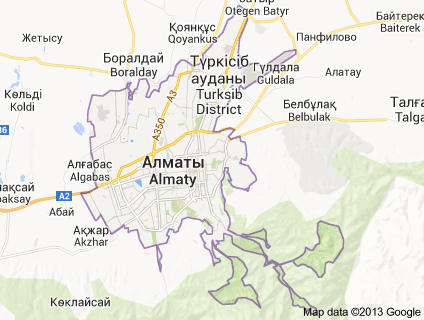
ALMA-ATA DECLARATION
International Conference on Primary Health Care, Alma-Ata, USSR, 6-12 September 1978
The International Conference on Primary Health Care, meeting in Alma-Ata this twelfth day of September, one thousand nine hundred and seventy-eight, considering the need for urgent action by all governments, all health and development personnel and the world community to protect and promote the health of all the peoples of the world, makes the following Declaration:
I- The Conference firmly reiterates that health, a state of complete physical, mental and social well-being and not merely the absence of disease or infirmity, is a fundamental human right and that the attainment of the highest possible level of health is a supremely important social goal throughout the world, the realization of which requires the involvement of many other social and economic sectors besides the health sector.
II- The serious inequality existing in the state of health of the population, especially between developing and developed countries, as well as within each country, is politically, socially and economically unacceptable and, therefore, a matter of common concern for all countries.
III- Economic and social development, based on a New International Economic Order, is of fundamental importance for achieving the highest possible level of health for all and for reducing the health gap between developing and developed countries. Promoting and protecting the health of the people is essential for sustained economic and social development and contributes to improving the quality of life and achieving world peace.
IV- The people have the right and the duty to participate individually and collectively in the planning and implementation of their health care.
V- Governments have an obligation to care for the health of their people, an obligation that can only be fulfilled through the adoption of appropriate health and social measures. One of the main social objectives of governments, international organizations, and the global community as a whole over the coming decades must be that all the peoples of the world achieve, by the year 2000, a level of health that allows them to lead socially and economically productive lives. Primary health care is key to achieving this goal as part of development in accordance with the spirit of social justice.
VI- Primary health care is essential health care based on practical, scientifically sound, and socially acceptable methods and technology, made universally accessible to all individuals and families in the community through their full participation and at a cost that the community and the country can afford, at every stage of their development, in a spirit of self-reliance and self-determination. Primary health care is an integral part of both the national health system, of which it is the central function and main focus, and the overall social and economic development of the community. It represents the first level of contact of individuals, families, and the community with the national health system, bringing health care as close as possible to where people live and work, and constitutes the first element of a continuous health care process.
VII- Primary health care:
- It is both a reflection and a consequence of the economic conditions and the sociocultural and political characteristics of the country and its communities, and is based on the application of relevant results from social, biomedical and health services research and accumulated experience in public health.
- It focuses on the main health problems of the community and provides the promotion, prevention, treatment and rehabilitation services necessary to solve those problems.
- It includes, at a minimum, the following activities: education on major health problems and on the corresponding methods of prevention and control; promotion of food supply and appropriate nutrition, adequate supply of drinking water and basic sanitation; maternal and child health care, including family planning; immunization against major infectious diseases; prevention and control of local endemic diseases; appropriate treatment of common diseases and injuries; and the provision of essential medicines.
- It entails the participation, in addition to the health sector, of all related sectors and fields of activity of national and community development, in particular agriculture, animal husbandry, food, industry, education, housing, public works, communications and other sectors, and requires the coordinated efforts of all these sectors.
- It demands and encourages to the fullest extent the self-responsibility and participation of the community and the individual in the planning, organization, operation and control of primary health care, making the best possible use of local and national and other available resources, and to this end develops through appropriate education the capacity of communities to participate.
- It must be supported by integrated, functional, and mutually supportive case referral systems in order to progressively improve comprehensive healthcare for all, giving priority to those most in need.
- It is based, both at the local level and at the referral and consultation level for cases, on health personnel, including as appropriate, doctors, nurses, midwives, assistants and community workers, as well as people who practice traditional medicine, to the extent needed, with appropriate social and technical training, to work as a health team and meet the expressed health needs of the community.
VIII. All governments must formulate national policies, strategies, and action plans to initiate and maintain primary health care as part of a comprehensive national health system and in coordination with other sectors. This will require the political will to mobilize domestic resources and make rational use of available external resources.
IX- All countries must cooperate, in a spirit of solidarity and service, to ensure primary health care for all people, since the achievement of health by the people of one country is of direct interest to and benefits all other countries. In this context, the joint WHO/UNICEF report on primary health care provides a solid foundation for promoting the development and implementation of primary health care worldwide.
X- It is possible to achieve an acceptable level of health for all humanity by the year 2000 through a better and more complete use of global resources, a considerable portion of which is currently allocated to armaments and military conflicts. A genuine policy of independence, peace, détente, and disarmament could and should free up additional resources that could be used for peaceful purposes, and in particular to accelerate social and economic development by allocating an appropriate proportion to primary health care as an essential element of that development.
The International Conference on Primary Health Care calls for urgent and effective national and international action to promote and implement primary health care throughout the world, and particularly in developing countries, in a spirit of technical cooperation and in accordance with the New International Economic Order. The Conference urges governments, the WHO, UNICEF, and other international organizations, as well as multilateral and bilateral agencies, non-governmental organizations, funding agencies, all health personnel, and the entire global community to support, at the national and international levels, the commitment to promote primary health care and to provide it with greater technical and financial support, especially in developing countries. The Conference calls upon all the aforementioned entities to collaborate in the establishment, development, and maintenance of primary health care in accordance with the spirit and letter of this Declaration.
Read the full text: click here!
For any comments or suggestions: radiologyzones@gmail.com
This material was automatically translated from medicosradiologos.com.ar