
The history of inventions and scientific advancements is more about the evolution of knowledge than about a single invention or isolated event, since these inventions are achieved because someone else has already made progress in another area. This means that attributing an invention to a single person can often seem unfair, given that there were others before and there will be others after who study, contribute, and develop the material to make something possible.
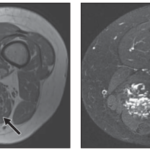
In this case, we want to highlight a doctor, researcher, and inventor who took the first steps (although we know it’s a long chain of steps) in the invention of the magnetic resonance imaging (MRI) scanner . This is Dr. Raymond Damadian , who in the 1970s first laid the groundwork and then developed the first MRI machine.
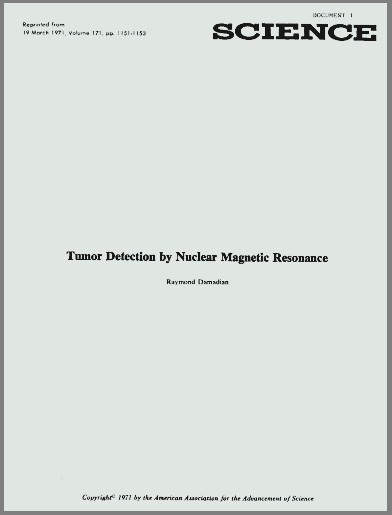
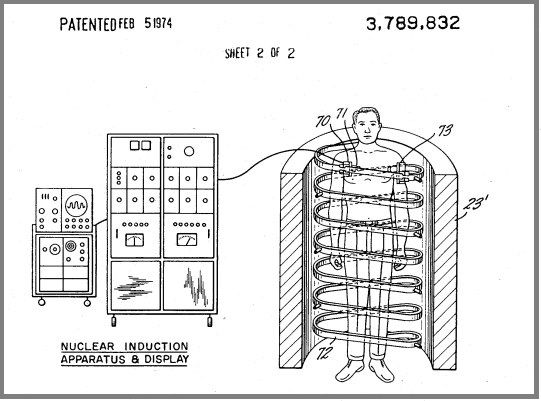
There are two documents of great historical relevance to this invention: the publication in the journal Science of an article in which Damadian states that cancerous tissue can be detected through resonance in 1971 and the registration of the first patent for the construction of a resonator, also by Damadian, in 1974.
We share with you here these two historical documents of the NMR invention process.
«Tumor Detection by Nuclear Magnetic Resonance»
Patent of Dr. Raymond Damadian (USA-1974)
In the 1971 article, Damadian stated in the abstract of his work regarding resonance and the detection of tumor tissue, something he had been working on for years:
«Spin-echo magnetic resonance imaging measurements can be used to differentiate between malignant tumors and normal tissue. Spin-lattice (T₁) and spin-spin (T₂) magnetic relaxation times were measured in six normal rat tissues (muscle, kidney, stomach, intestine, brain, and liver) and in two malignant solid tumors: Walker sarcoma and Novikof hepatoma. The relaxation times of the two malignant tumors were clearly outside the range of values of the normal tissues studied, indicating that the malignant tissues were characterized by increased freedom of movement of tissue water molecules. The possibility of using magnetic relaxation methods for the rapid differentiation between benign and malignant surgical specimens was also considered. The spin-lattice relaxation times of two benign fibroadenomas were different from those of both malignant tissues and were equal to those of muscle.»
In the field of radiology and diagnostic imaging, we’re accustomed to terms like T1, T2, and relaxation times, and we’ve been seeing MRI scanners and magnetic resonance imaging (MRI) scans since university, but not so long ago, this didn’t exist. In Argentina, for example, the first MRI scanner was installed in 1987 at the Hospital Italiano in Buenos Aires. So, we’re witnessing major medical advances that, from the invention of X-rays to the present day—a period of just over a century—allow us to see structures inside the human body that were previously unimaginable.
The story of magnetic resonance imaging continued after Damadian’s work with two other researchers who, building on his observations and studies, were able to create the first magnetic resonance image in 1977: Paul Christian Lauterbur and Peter Mansfield . They received the Nobel Prize in 2003 for the invention of magnetic resonance imaging. As we’ve said, even though we are highlighting Raymond Damadian’s contribution to the development of MRI, we know that inventions and discoveries are more of a process in which many people participate over the years.
Returning to Dr. Damadian, he wrote an autobiography in 2015 recounting his story, centered on the invention of something he considers revolutionary in medicine, and perhaps it was. The book is titled: «Gifted Mind: The Dr. Raymond Damadian Story, Inventor of the MRI . «
Here is a small excerpt from this biography:
«Sometimes, a single thought can make all the difference. An idea. A concept. And like a lightbulb switching on, in an instant, everything changes. That’s how the idea of creating a machine to scan the human body came about. And although several events led to that moment, the idea itself came to me suddenly. That thought gave rise to a device that is now fundamental to saving lives around the world.»
Today, tens of millions of people in developed countries have benefited from this technological marvel of modern medicine. Millions more know someone who has benefited from an MRI, whether a friend or a relative. Sometimes, when I go out to dinner with my wife, we hear people talking about their MRI experience. Donna is often tempted to lean over and say, «Hey, this guy here,» pointing at me, «he invented the MRI.»
When I started, I never intended to invent a device that would radically change the world of medicine. My only goal was to find some way to mitigate or overcome the tragic consequences of cancer. But that would require years, a lot of work, and research. For the time being, I had to concentrate on finishing medical school.
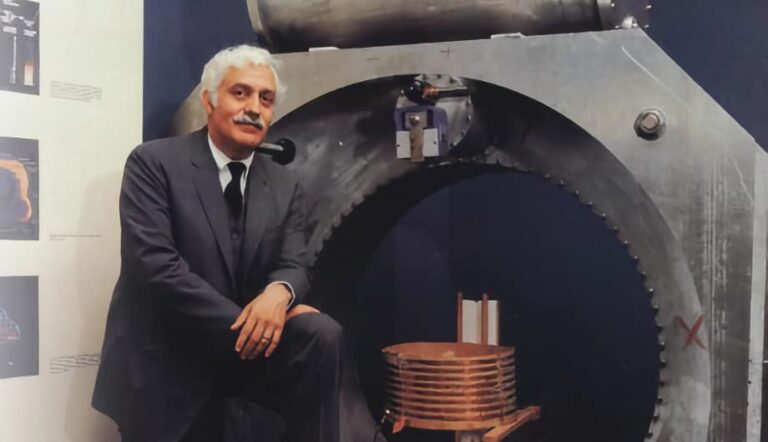
Finally, we present a photo of Dr. Raymond Damadian (1936-2022), who is the protagonist of this short article:
This material was automatically translated from medicosradiologos.com.ar
For any comments or suggestions: radiologyzones@gmail.com