
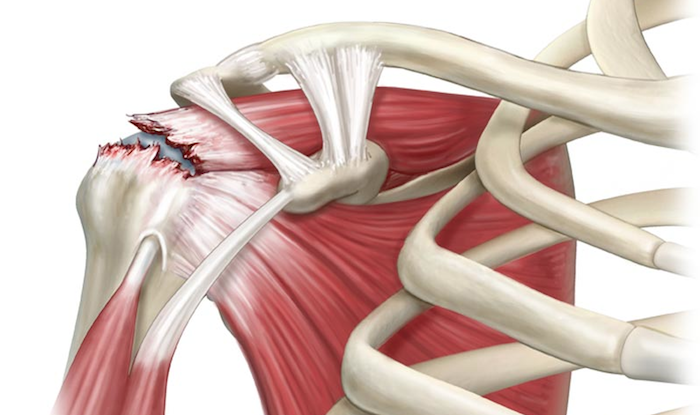
Rotator cuff injuries constitute a pathology or group of pathologies that are diagnosed daily by both magnetic resonance imaging and ultrasound.
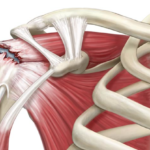
A thorough understanding of the anatomy of this region is essential to recognize the pathology and the affected tendon. For this anatomical knowledge, consult any of the basic anatomy texts already recommended on our website. Pay particular attention to muscle insertions, bony landmarks, and ligamentous structures. With this basic anatomical knowledge, interpreting the images will be much easier.
To understand MRI images, we need a basic knowledge of magnetic resonance imaging and its sequences, as well as the most common pitfalls. After that, we need to know the pathology in order to see it in the image, since it’s impossible to diagnose something we don’t know. If we also have clinical data or the ability to perform a minimal examination of the patient with simple maneuvers, it will be easier to find the pathology, as we will know beforehand what we are looking for.
For ultrasound, in addition to anatomy and knowledge of the method, practice and a work protocol are required (some are available on this same page, at this link ). In this case, we have the patient with us, whom we can examine and question; and we also have the other shoulder, which, if healthy, can serve as a normal reference point.
Finally, clinical-surgical knowledge is always a pillar that supports and facilitates diagnoses, so we must also approach that.
Therefore, the procedure to follow to reach a minimum knowledge of any group of pathologies would be: anatomy, imaging method, basic clinical-therapeutic, pathologies and differential diagnoses.
Here are some basic articles to help you begin understanding rotator cuff pathology:
1. MR Imaging of Rotator Cuff Injury: What the Clinician Needs to Know?
2. Rotator Cuff:evaluation with US and MR imaging
3. US of the Rotator Cuff: Pitfalls, Limitations, and Artifacts
4. The pathogenesis and surgical treatment of tears of the rotator cuff
5. US of the Shoulder: Non–Rotator Cuff Disorders
This material was automatically translated from medicosradiologos.com.ar
For any comments or suggestions: radiologyzones@gmail.com